
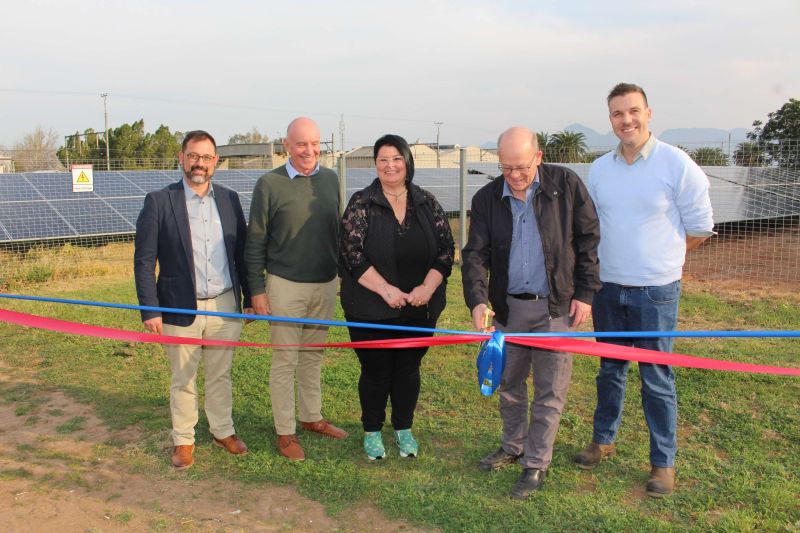
Sustainable Power Solutions (SPS) has commissioned a 1MWp solar PV and battery storage system at the National Institute for the Deaf’s (NID) De La Bat campus in Worcester, marking an important step in the institute’s move towards cleaner, more cost-effective and resilient energy.
The system was launched on 4 August 2026 at NID in Worcester. Delivered through an SPS-funded Power Purchase Agreement (PPA), the project enables NID to benefit from renewable energy without the upfront capital cost normally associated with infrastructure of this scale.
Clean energy with a direct community benefit
For NID, renewable energy is closely linked to its ability to serve the Deaf community. Established in 1881, the organisation provides education, vocational training, residential care, and related support services from its De La Bat campus, where reliable and affordable electricity is essential to daily operations.
By lowering electricity costs and reducing reliance on municipal supply, the project is expected to help NID direct more of its resources towards the programmes and services that support its community.
The system is expected to generate approximately 1.74 GWh of clean electricity each year—roughly equivalent to the combined annual output of 125 average residential solar systems—and avoid around 1,600 tonnes of CO2 emissions annually. Its 100 kWh battery is used to support supply in high-demand periods, helping NID reduce exposure to the most expensive portion of its municipal electricity bill.
“This project is a strong example of renewable energy being designed around the needs of the organisation it serves,” said Garth Cloete, COO at SPS. “For NID, the value goes beyond clean electricity. Lower energy costs and improved energy resilience can free up resources for the vital work the institute does for the Deaf community.”
A practical energy solution for a busy campus
The approximately 1MWp fixed-tilt, ground-mounted solar PV system includes nine Huawei string inverters, a Huawei battery inverter with battery energy storage, and a Higeco energy management system control panel.
The grid-tied hybrid system prioritises solar energy for use on site, stores surplus solar power in the battery where possible, and will export excess energy to Breede Valley Municipality’s local grid once the required approval is in place.
By combining solar generation, battery storage and a PPA structure, the project gives NID greater control over energy costs while allowing capital to remain focused on its core services.
Partnerships built around community resilience
Bührmann Consulting Engineers conducted the feasibility study, analysing the expected energy yield and the impact on the municipal grid.
Breede Valley Municipality Executive Mayor Ald. Antoinette Steyn attended the launch, while Councillor Ald. Dr. Julian Kritzinger spoke on behalf of the municipality. Herman Bührmann, Managing Director of Bührmann Consulting Engineers, also addressed attendees, alongside NID CEO Cobus van Deventer and SPS representatives Garth Cloete, Nathan Bam and Ruan Horak.
The project also strengthens the long-standing relationship between NID and Breede Valley Municipality.
Engineering a solution for long-term performance
SPS was responsible for the design, installation, and commissioning of the solar and battery storage system. The project included a full medium-voltage upgrade, new municipal switchgear and a 1,250kVA transformer, as well as fixed-tilt ground-mounted structures, ClearVu-type security fencing around the array and a dedicated bullnose roof structure to protect the inverter and battery equipment.
Construction was completed while the active Deaf community continued to use the campus, with daily activities largely unaffected and zero safety incidents reported.
“This was a technically detailed project delivered in a sensitive and active environment,” said Nathan Bam, Project Manager at SPS. “Our priority was to deliver a reliable energy solution while ensuring that NID’s daily operations could continue with minimal disruption.”
Setting an example for sustainable community investment
The NID project shows how renewable energy can support organisations whose impact reaches well beyond commercial operations. For institutions with essential public and community-facing services, lower energy costs and improved resilience can make a meaningful difference to long-term sustainability.
“Energy investment can have an impact far beyond the electricity bill,” said Cloete. “When organisations can reduce energy costs and improve resilience without diverting significant upfront capital, they are better positioned to focus on the communities they serve. We believe this model can be replicated by other institutions looking for sustainable, long-term energy solutions.”
With approximately 1.74 GWh of renewable electricity expected to be generated each year, the NID project stands as a practical example of how local energy investment can deliver environmental, financial and social value at the same time.
Editorial Contacts
Evolution PR
Valentine Rakobela


